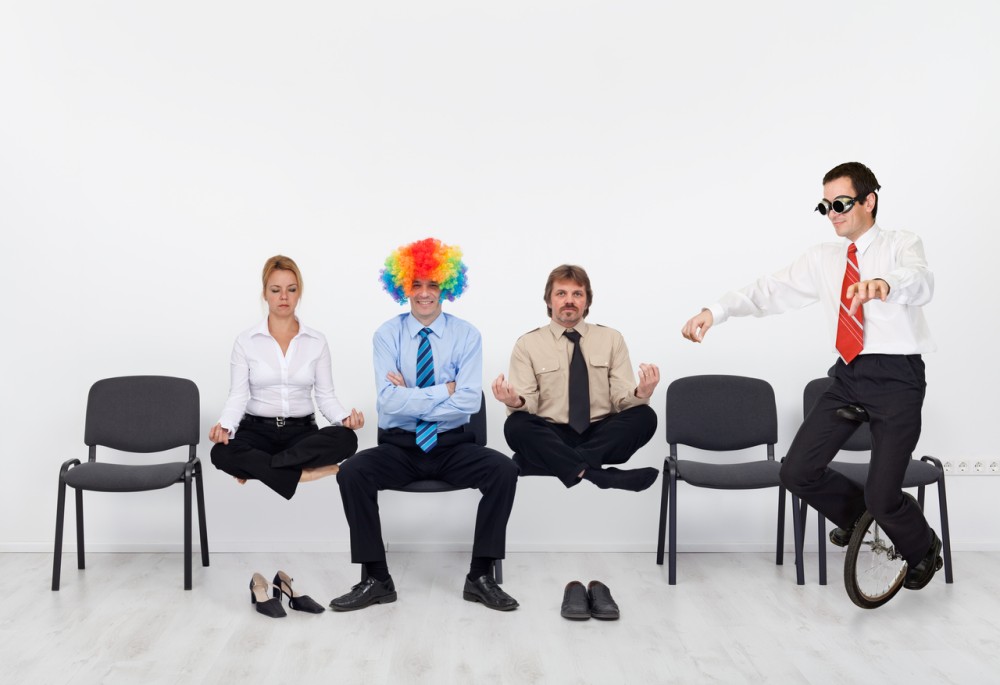
Stress at work – how to deal with it
Published on 12.04.2024Updated: 04.05.2026
Stress at work is everyday life for most of us – in 2026, with hybrid teams, tight deadlines and constant organizational changes, the problem hits even harder. The effects are serious: trouble concentrating, chronic fatigue, and in extreme cases depression or burnout. Here are proven stress management techniques to help you quickly regain balance and get back to productive work. It's worth remembering that reducing stress goes hand in hand with effective team building – a well-bonded team is a more resilient one.
Stress Ball — a Simple but Powerful Trick for Workplace Tension
A squeeze ball is one of the simplest and most effective relaxation tools – especially useful in moments of intense stress, when muscles tense up involuntarily. Regular squeezing engages the hands, mechanically releases physical tension, and redirects attention away from mental stressors.
Smart versions with mobile apps are now available, measuring grip strength and suggesting tailored breathing exercises. It works immediately – no need to leave your desk or interrupt your workflow.
Real-life example: a corporate developer keeps one by her monitor – after every tough call she squeezes it for a minute, then gets back to coding 30% faster. "It's like a reset for hands and head," she says.
Tomasz, CEO of integracyjne.pl, recommends: "The ball isn't a gimmick, it's a tool. Companies are putting them in onboarding packs – cheaper and simpler than therapy, and it works right away."
Dancing as a Stress Relief Technique — Endorphins on Demand
Dancing is one of the most effective natural ways to reduce workplace stress – it engages muscles, improves circulation, and triggers an endorphin release. You don't need to go to a party – 3 minutes of your favourite playlist at your desk is more than enough.
In the hybrid and remote work era, "dance breaks" are gaining popularity – short movement pauses promoted on TikTok or company dance challenges organized via Teams or Slack. These activities also work brilliantly as part of structured team-building events – shared movement is one of the fastest ways to dissolve group tension.
Real-life example: a marketing team launched a weekly "Flash Mob Friday" – everyone dances to the same hit in their own kitchen and posts a clip to the company channel. Stress levels dropped noticeably and laughter became a daily occurrence.
Tomasz comments: "Dancing bypasses the mind and goes straight to the body. In hybrid teams it's a brilliant way to bond – you dance alone but feel part of the group."
Deep Breathing — The Fastest Relaxation Technique at Work
Deep, conscious breathing is a classic anti-stress technique that never goes out of style – and for good reason. When you're stressed, a few slow, deep breaths immediately oxygenate the brain and help create distance from whatever is causing tension.
The 4-7-8 technique (inhale for 4 seconds, hold for 7, exhale for 8) can lower heart rate in as little as 60 seconds. Apps like Calm or Insight Timer offer ready-made short breathing sessions designed specifically for office stress.
Real-life example: a sales manager does 3 rounds of box breathing before every tough meeting. "The client sees a composed person, and I feel like I just meditated," she admits.
Tomasz emphasizes: "Breathing is the only anti-stress technique you can do on a call with your camera on. In 2026 companies are teaching this during onboarding – it's a fundamental 21st-century professional skill."
Write Down Your Frustrations — How Journaling Helps Manage Work Stress
Writing down all the sources of your frustration is a simple but surprisingly effective stress management technique. Putting thoughts on paper (or screen) organizes the mental chaos and gives you perspective on problems that feel overwhelming in the moment.
A simple framework works perfectly: "What's stressing me out? What can I change? What do I let go of?" After just 5 minutes, you'll typically find that 80% are minor issues and most of the rest have a concrete solution. Digitally, Notion templates or dedicated journaling apps work well. Understanding your own motivational drivers and workplace needs makes this process significantly more powerful.
Real-life example: an HR specialist wrote a weekly "frustration list" each evening. By morning, half the items could be resolved with a single email and the rest discarded entirely. "I sleep like a baby," she laughs.
Tomasz advises: "Writing pulls the chaos out of your head. In the age of constant notifications and information overload, it's a survival skill. 10 minutes in the evening = better sleep and a clearer mind in the morning."
Anti-Stress Trends 2026: Technology, Wellbeing, and Back to Nature
The future of workplace stress management is a blend of technology and nature: wearables monitoring stress levels in real time (Oura Ring, Whoop), VR forest meditations from your office chair, and micro-breaks powered by biofeedback. More and more companies are investing in quiet rooms, Employee Assistance Programs (EAPs), and apps with daily mindfulness exercises. Many organizations are also combining these efforts with outdoor team-building and company events, treating employee wellbeing as a core part of their employer branding strategy.
The strongest results, however, come from simple and consistent habits: a phone-free walk, 5 minutes staring out the window, ginger tea instead of a fifth coffee. Tomasz sums up: "Tech helps monitor stress, but nature and daily routine are what heal it. Build in a 3-minute reset every day – the return on that investment is a hundredfold."
The Manager's Role in Reducing Team Stress
In 2026, aware leaders regularly ask during 1:1s: "What's stressing you out right now?" The best companies offer employees access to psychologists, flexible working hours, and initiatives like "no-meeting Wednesdays" – days free from calls, reserved for deep focused work. Effective stress management at team level also requires a strong relational foundation – it's worth exploring a corporate travel and team engagement strategy that helps build the trust and cohesion that reduce everyday tension. Your role as a manager? Start with yourself – a calm leader builds a calm, high-performing team.